Kitchen Pantry & Press Space Maximisation
Transform standard Irish kitchen presses into efficient storage. Container systems, shelf dividers, and labelling strategies that actually work.

Why Your Press Space Matters
Your kitchen press isn't just storage—it's the backbone of your whole cooking routine. When it's disorganised, you're wasting time hunting for things. You can't see what you've got, so you buy duplicates. Meals take longer to prepare because nothing's where you expect it to be.
The good news? Most Irish kitchen presses are actually bigger than you think. They've just never been optimised. We're not talking about expensive custom systems here. With the right containers, some simple shelf dividers, and a labelling system that sticks, you can transform a chaotic press into something that actually works for your family.
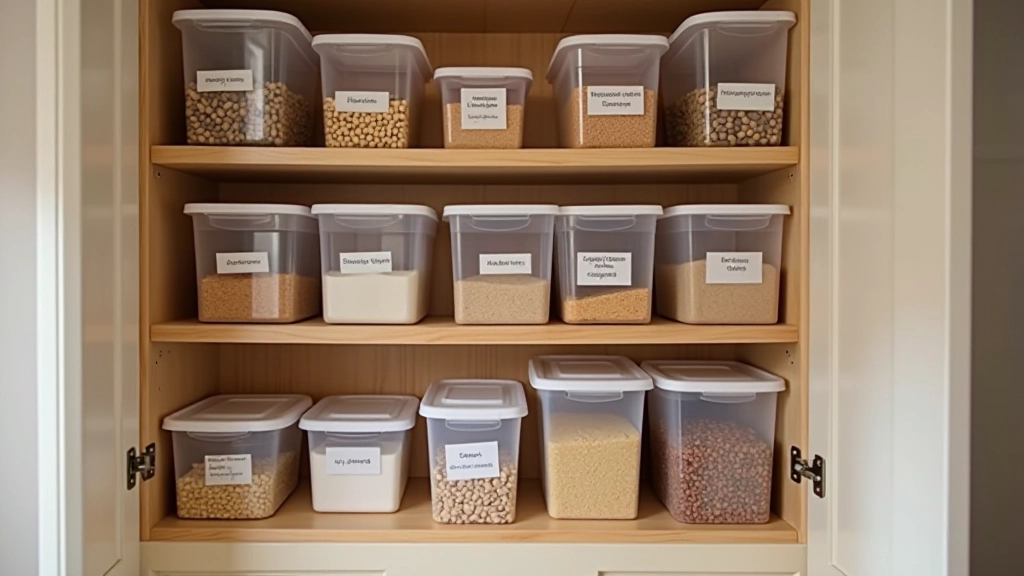
Container Systems That Stick
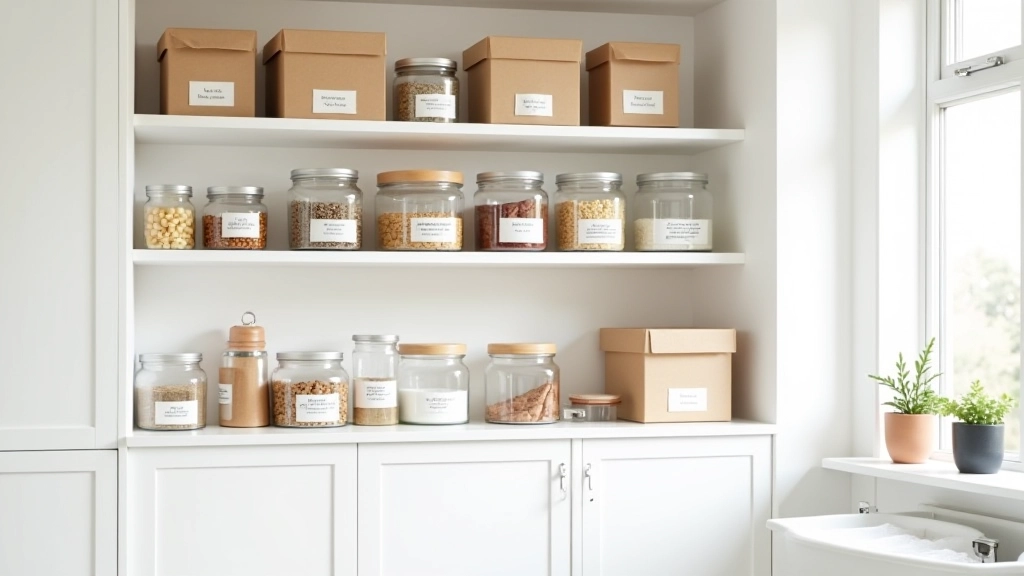
Here's what we've learned: matching containers make everything easier. You're not mixing tall jars with short tins with random plastic boxes. Everything's the same height, so you can actually stack things properly and use your vertical space.
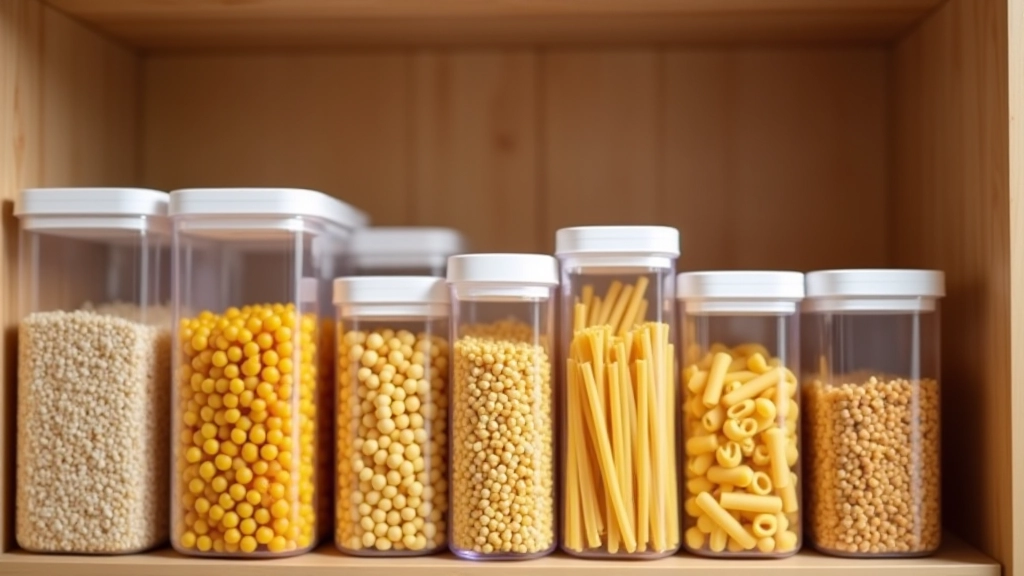
Clear containers are your friend. You'll instantly see what you've got and when you're running low. Pasta's running out? You'll spot it from across the kitchen. Baking soda levels dropping? You'll know before you need to bake. Plus, they're moisture-proof—brilliant for Irish kitchens where humidity's always a factor.
Container Types That Work
- Tall square containers for cereals and grains (3-4 litre capacity)
- Flat shallow containers for tea, coffee, and baking supplies
- Medium round containers for dried pasta and rice
- Small spice jars with snap-lock lids for herbs and seasonings
- Stackable square tins for biscuits and treats
Don't overthink the brand. You don't need designer containers costing €20 each. Standard clear storage boxes from home stores work brilliantly. What matters is consistency. Buy the same range and you've got a system that actually looks intentional, not thrown together.
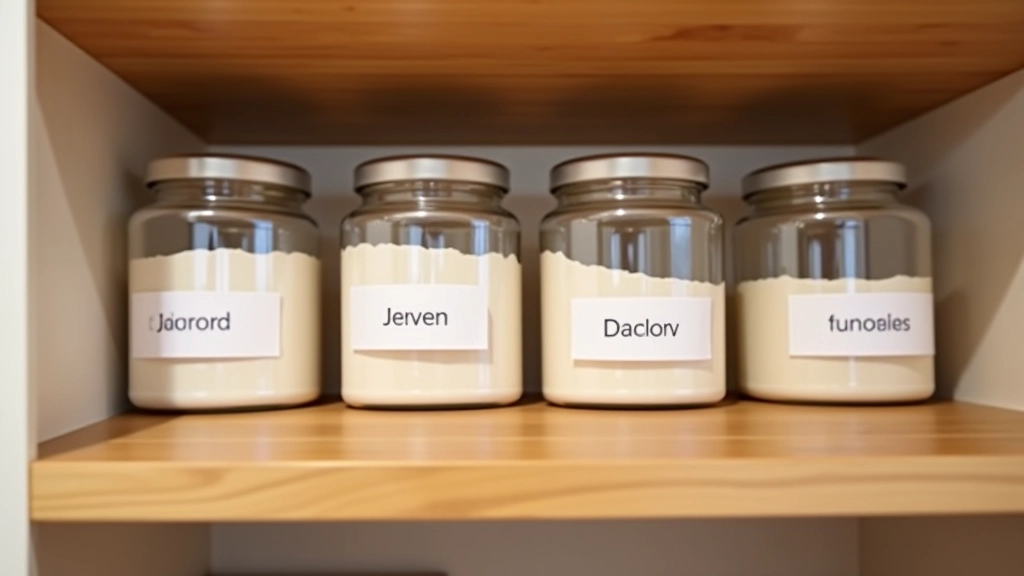
The Labelling System That Lasts
A label printer isn't a luxury—it's the thing that makes your system actually stick. You'll print labels once and they're done. Kids can read what's in each container. Everyone knows where things go. No more guessing, no more "where's the cinnamon?"
Print two labels for each container: one on the front (what's inside) and one on the side (best-before dates and quantities). You'll spend 20 minutes printing and labelling everything, and it'll save you hours over the next year. That's the kind of maths that makes sense.
Font size matters: Go 14pt minimum so you can read labels from across the kitchen without your glasses.
Laminate them: Moisture from your kitchen will smudge labels. Laminated labels survive the damp Irish climate.
Colour-code by category: Green labels for grains, blue for baking, red for dried fruit. Your brain recognises patterns faster than reading.
Shelf Dividers & Vertical Storage
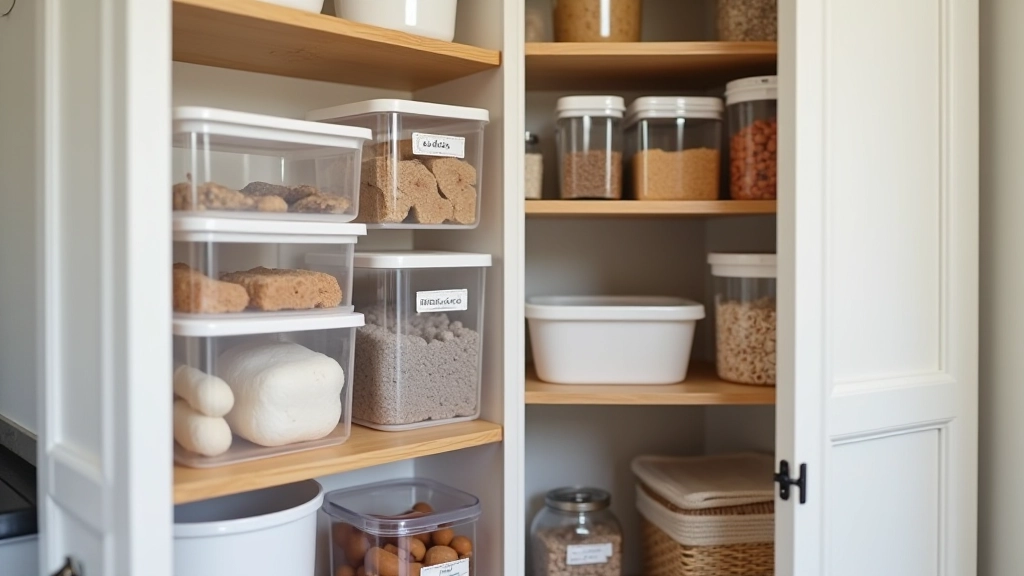
Here's where most people lose vertical space: they stack boxes flat on top of each other. Dividers change everything. You're using the depth of your press properly now. Jars don't topple. You can actually see what's behind what.
Acrylic shelf dividers (the kind used for office files) work perfectly for kitchen presses. Stand your containers upright instead of stacking them flat. A standard 60cm press shelf can hold 5-6 containers standing up instead of 2-3 stacked flat. That's nearly triple the capacity without buying a bigger press.
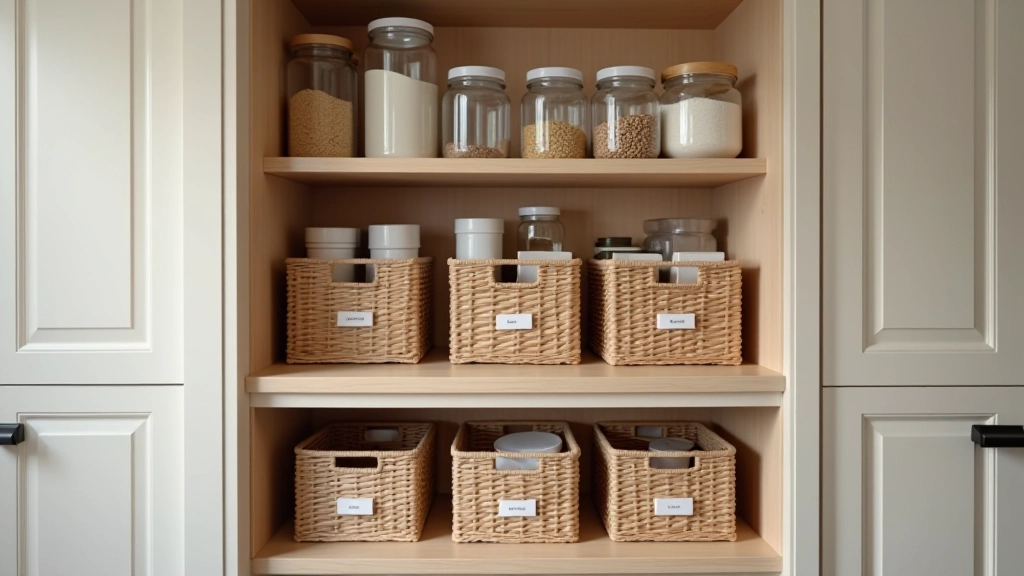
Don't underestimate the power of baskets either. A shallow woven basket on a shelf holds all your tea bags, sugar packets, and coffee sachets in one place. Everything's contained, nothing falls to the back, and you can pull the whole basket out to see what you've got. Families with kids find this especially helpful—keeps small packets from getting lost.
Getting Started: Your 5-Step System
You don't need to overhaul everything at once. Start with one section and build from there. Most families finish a complete press in about 3-4 weekends.
1
Empty & Audit
Take everything out. Bin expired items (those spices from 2019 aren't doing anyone favours). Group like items together. You'll discover what you actually have—probably duplicates of things you forgot about.
2
Measure & Plan
Measure your shelf heights and depths. Sketch out where things'll go. Do you need more tall containers for cereals or more medium ones for pasta? Plan around what you actually store, not some magazine fantasy.
3
Buy Containers & Dividers
Purchase matching containers in the sizes you need, plus dividers. Budget €40-60 per shelf. It's an investment that lasts years. Keep receipts—returns happen when you realise you've miscounted sizes.
4
Transfer & Label
Fill containers and print labels. This is the bit where it all clicks into place. You're actually seeing your system come together. Takes an hour per shelf once you've got into the rhythm.
5
Maintain & Adjust
After 2-3 weeks, you'll notice what's not working. Maybe you need one more tall container. Perhaps a basket works better than dividers in that corner. Tweak it. This is your system—it should fit your family, not the other way around.
A Real Kitchen Press Transformation
A three-shelf press in a standard Dublin semi-detached house used to hold everything crammed in. The family couldn't find anything. Pasta boxes got squashed. Containers fell out when you opened the door. Sound familiar?
Top shelf: Clear containers for cereals and breakfast items, standing upright with dividers. They're using 60% more space than before.
Middle shelf: Baking supplies in matching containers, with a basket for loose items like baking paper and foil. Everything's visible and accessible.
Bottom shelf: Taller containers for pasta, rice, and grains. A small basket for snacks. They're storing 40% more than they did before, just by standing things upright instead of stacking flat.
Time to find something? Used to be 5 minutes of rummaging. Now it's 5 seconds. They're not buying duplicate pasta because they can actually see what they've got. That savings alone pays for the containers in a few months.
The Real Payoff
You're not just tidying a press. You're creating a system that saves time every single day. You're reducing food waste because you can actually see what you've got. You're shopping more efficiently because you're not buying duplicates. Your kids can find their own snacks without asking. Cooking becomes faster because everything's organised.
That's the real win. Not the Instagram-perfect press (though yours will look pretty good). But the fact that your kitchen works better. That small decisions—clear containers, dividers, good labels—actually add up to something meaningful in your daily life.
Start this weekend. Pick one shelf. Give yourself 3 hours. You'll be amazed at what's possible in a space you've probably ignored for years.
Disclaimer
This article provides general guidance on kitchen storage and organisation based on practical experience and common household practices. Individual results will vary depending on your specific kitchen layout, press dimensions, and storage needs. Product recommendations are informational only—we don't endorse specific brands. Before purchasing containers or making structural changes to your kitchen, ensure any modifications are safe and suitable for your home. For kitchens with specific moisture, pest, or food safety concerns, consult appropriate professionals.
Explore More Organisation Solutions