
Why Organisation Matters in Kids' Spaces
A well-organised bedroom isn't just about aesthetics. It's about teaching your kids responsibility, helping them find things without asking you fifteen times, and making bedtime routines actually work. When children know exactly where everything belongs, they're more likely to tidy up after themselves — and that's the real win.
The trick isn't fancy storage systems or expensive organisers. It's clear labels, accessible containers, and zones that make sense to a child's mind. You'll notice the difference within days — less stress, fewer lost toys, and genuinely easier mornings.
Key insight: Kids aged 4-8 respond best to visual systems — they can't read labels yet, so use picture labels. Kids 9+ can handle written labels but benefit from colour-coding too.
Start With Labelled Bins & Clear Categories
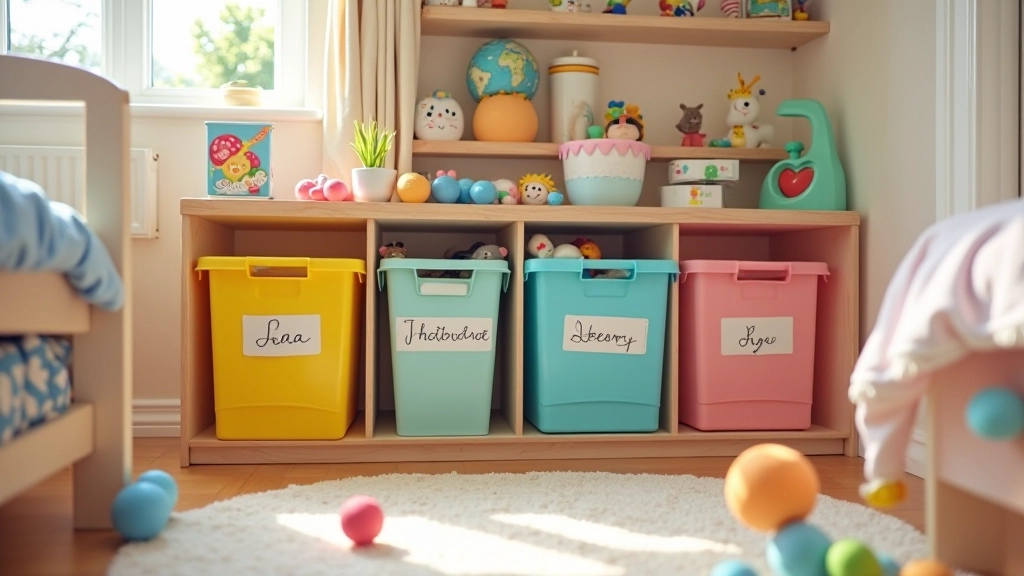
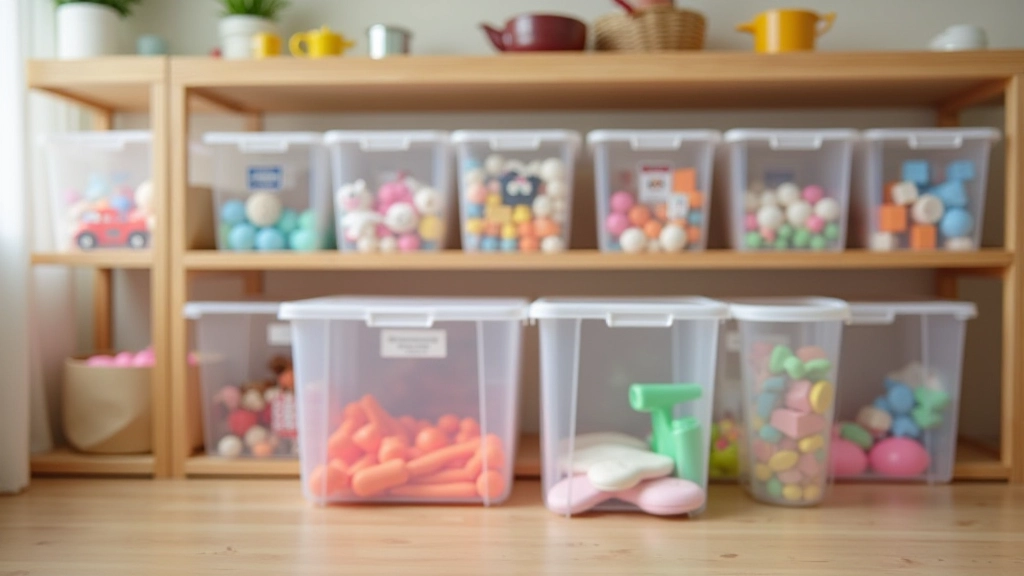
The foundation of any kids' storage system is clear, labelled containers. You'll want bins for specific categories — building blocks, dolls, cars, art supplies — not one giant "toys" bin where everything gets jumbled.
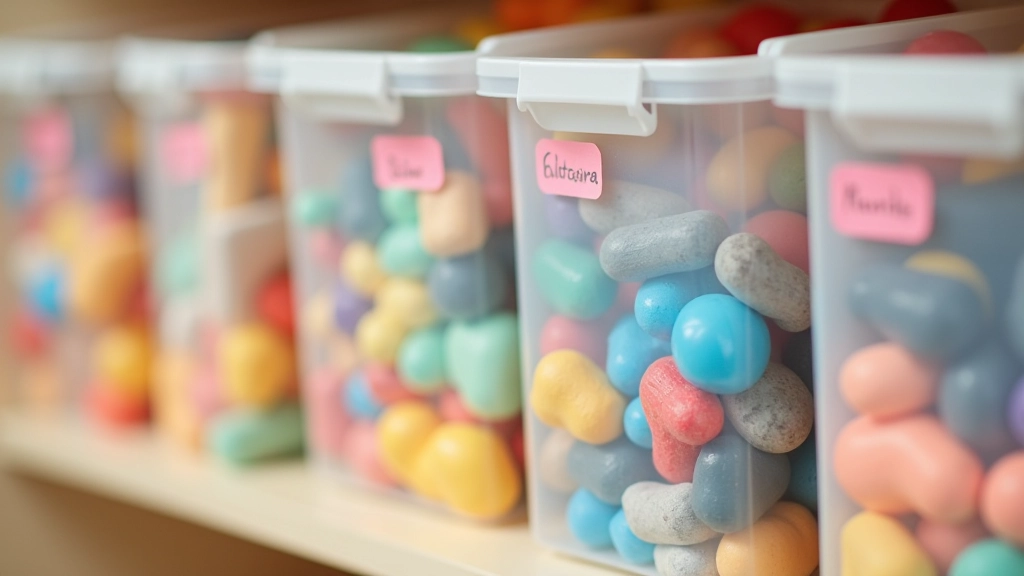
Label everything. And we mean everything. Use a label maker or print labels with pictures and words. Kids can't put toys away if they don't know where "away" is. Transparent plastic containers work brilliantly because children can see what's inside without opening every bin.
- Clear plastic bins for visibility
- Picture labels for younger kids
- Limit categories to 5-7 main types
- Label at child's eye level
Implement a Rotation System
Here's the secret most parents don't know: you don't need every toy out at once. A rotation system keeps the bedroom from feeling like a toy shop exploded, reduces overwhelm for both you and the kids, and magically makes old toys feel "new" when they come back.
Store about 30% of toys in the active zone (on shelves and accessible), and rotate the remaining 70% every 4-6 weeks. Use storage boxes in the attic, under the bed, or in a utility room. You'll be shocked how much tidier the space feels with fewer toys available.
The rotation doesn't have to be rigid. Some toys stay out year-round (favourites), and you rotate seasonal items (building sets in winter, outdoor toys in summer). It's flexible and real-life.
Age-Appropriate Storage Solutions
Storage needs change as kids grow. A toddler needs completely different systems than a teenager, and pretending otherwise just leads to frustration.
Ages 2-4
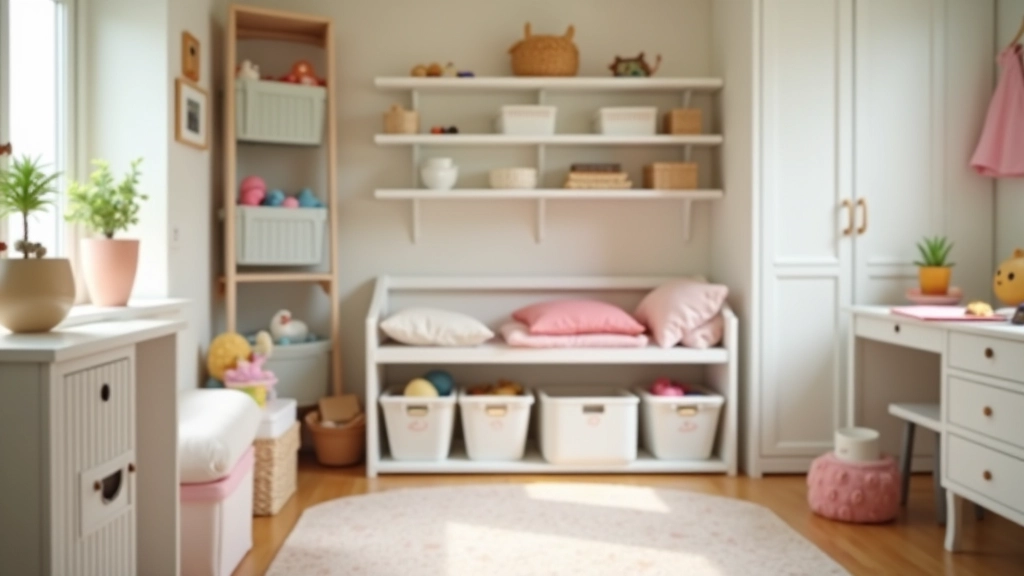
Low, open shelving with large bins (they can't reach high shelves yet). Toys should be chunky, fewer in number, and easy to grab. Picture labels only. Keep it simple.
Ages 5-8
Mix of open shelving and closed storage. Can use both picture and word labels. Start teaching them to tidy by category. Medium-sized bins they can handle independently.
Ages 9-13
More independence with storage. Combination of display shelving and hidden storage. Can manage more complex systems. Involve them in deciding what stays, what goes, what rotates.
Ages 14+
Let them design their own system. They've got homework, sports gear, social stuff. Focus on zones: study area, sleep area, hobby area. Respect their space and choices.
Create Functional Zones
Instead of one massive storage area, divide the room into zones. This isn't complicated — it's just organising by activity.
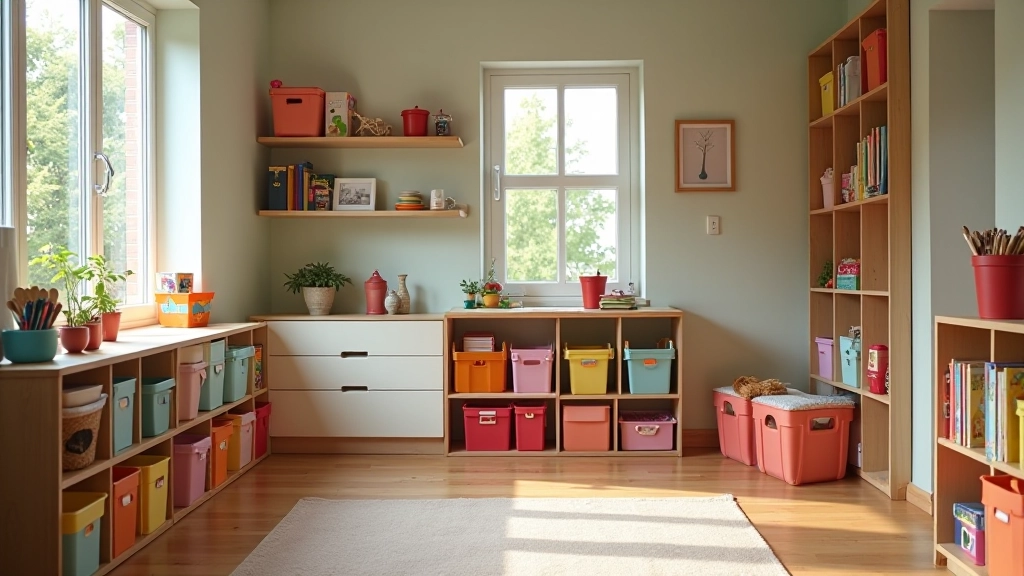
You might have a creative zone (art supplies, craft materials), a quiet zone (reading corner with book storage), a play zone (toys and games), and a sleep zone (bed and personal items). Each zone has its own storage that matches the activity. Kids instinctively understand this — they know where things go because they belong to specific activities.
Zones don't require fancy dividers. A shelf can separate areas, or you can just use wall space smartly. The point is clarity: art supplies stay in the creative corner, books stay on the reading shelf, building blocks live near the play area.
The Maintenance That Actually Works
You've set up a beautiful system. Now what? The key to keeping it working is realistic expectations and consistency, not perfection.
A daily tidy (15 minutes before bed) keeps things manageable. A weekly sort through ensures bins don't become dumping grounds. A monthly cull removes broken toys and things they've outgrown. That's it. You're not reorganising everything constantly — you're maintaining the system you built.
Don't expect kids to maintain the system perfectly. That's not their job yet. Your job is to make the system so clear and accessible that maintaining it feels natural to them. If they're struggling to keep it tidy, the system probably isn't working — adjust it rather than blaming them.
Daily Tidy
15 minutes before bedtime. Toys back to bins, books back to shelves. Make it routine.
Weekly Sort
Check bins don't have random items mixed in. Return things to correct categories.
Monthly Cull
Remove broken toys, things they've outgrown, and items they don't play with.
Seasonal Rotation
Every 4-6 weeks, swap stored toys with active ones. Keeps interest fresh.
Smart Shopping for Storage
You don't need expensive, designer storage solutions. Honestly, you'll waste money if you buy fancy first. Start basic and add as needed.
Clear plastic bins from budget retailers work brilliantly. Wooden shelving units are affordable and last years. Label makers cost a few euros. You're looking at modest investment for a system that genuinely works.
Before you buy anything, measure your space and decide your zones. Nothing worse than buying ten bins only to discover they don't fit. Plan first, shop second.
The Real Payoff
A properly organised children's bedroom and playroom isn't about perfection. It's about creating a space where kids can find what they need, put things away independently, and actually enjoy their room. It teaches them responsibility, reduces daily stress for you, and makes everyone's life simpler.
Start small. Pick one zone. Set up clear labels. See how it goes. You don't need to reorganise the entire bedroom in a weekend. Small, consistent changes add up to a system that actually works for your family.
And here's the thing — kids respond positively when they can understand the system. They'll surprise you with how well they maintain it once they know what's expected. That's when you'll know the system is working.